Incident & Risk Reporting

Enable safe, confidential reporting of psychosocial incidents and risks

Enable safe, confidential reporting of psychosocial incidents and risks

Enable safe, confidential reporting of psychosocial incidents and risks

ReFresh provides multiple reporting pathways that respect employee privacy while capturing the critical information needed for WHS compliance. Whether employees want to report confidentially (identity protected from your organisation) or provide their details for follow-up, your organisation gets structured, actionable data that supports proper investigation and response.


employee safety

Remove barriers to reporting with identity-protected submissions

Many employees hesitate to report psychosocial incidents due to fear of retaliation or judgment. ReFresh's confidential reporting ensures employees can raise concerns without their identity being exposed to your organisation, while still providing the information needed to investigate and address workplace hazards.

When employees choose confidential reporting, their identity is never disclosed to management, investigators, or HR teams within your organisation. This privacy-first design builds trust and increases reporting rates while maintaining the data integrity needed for effective incident management.

Identity always protected

17 hazard categories

Detailed incident descriptions

Secure submission process

Identity always protected

17 hazard categories

Detailed incident descriptions

Secure submission process

Identity always protected

17 hazard categories

Detailed incident descriptions

Secure submission process

Follow-up support

Support employees who want to provide contact information

Some incidents benefit from reporter follow-up - whether for investigation clarification, support services, or outcome updates. ReFresh's identified reporting pathway allows employees to optionally provide contact details while maintaining confidentiality through role-based access controls.

Only authorised personnel can view reporter details, and all access is logged for accountability. This balanced approach respects employee privacy while enabling the support and communication that complex investigations often require.


Sensitive Concerns

Provide a dedicated pathway for sensitive psychosocial risks

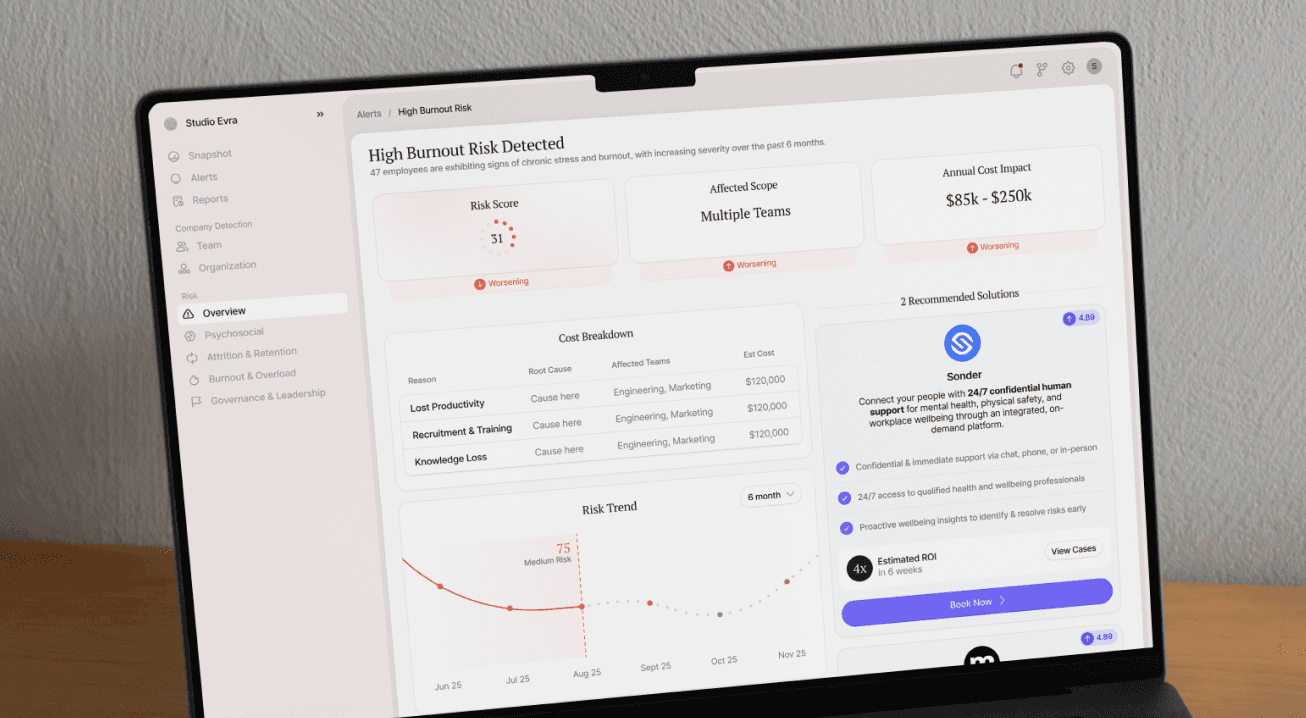
Not every psychosocial risk needs a formal incident report. ReFresh's confidential risk intake allows employees to flag emerging concerns, potential hazards, or systemic issues before they escalate into incidents. This early warning system helps organisations address risks proactively.

Confidential intake submissions can be identity-protected or identified, giving employees flexibility in how they raise concerns. The information feeds into your risk intelligence dashboard, helping leadership spot patterns and prioritise preventive action.

Early risk flagging

Flexible confidentiality options

Pattern detection

Intelligence integration

Early risk flagging

Flexible confidentiality options

Pattern detection

Intelligence integration

Early risk flagging

Flexible confidentiality options

Pattern detection

Intelligence integration

compliance ready

Collect consistent information for investigation and reporting

ReFresh guides reporters through a structured process that captures the information required for WHS compliance and effective investigation. Questions are designed to gather context, identify affected parties, and assess severity without being overwhelming or traumatic.

All submissions are categorised against the 17 psychosocial hazard categories, making it easy to aggregate data for risk assessments, compliance reporting, and trend analysis. The structured approach ensures you can compare and analyse incidents over time.


Assignment Options

Ensure reports reach the right people for response

Different types of psychosocial incidents require different response teams. ReFresh supports flexible assignment workflows - assign incidents to specific investigators or teams, track progress through tasks, and manage investigation workflows according to your organisation's protocols.

Workflow configurations help route reports to appropriate personnel based on hazard category, severity, or location. All assignments respect the confidentiality level of the original report.

Build trust through privacy-first reporting

ReFresh's incident and risk reporting tools make it safe and easy for employees to raise psychosocial concerns. With identity-protected options, confidential pathways, and structured data capture, you'll increase reporting rates while collecting the information needed for WHS compliance and effective risk management.

Identity-protected reporting

Early warning system

WHS-compliant data

Flexible Assignment

Identity-protected reporting

Early warning system

WHS-compliant data

Flexible Assignment

Identity-protected reporting

Early warning system

WHS-compliant data

Flexible Assignment

GOT QUESTIONS?

Frequently asked questions

Frequently asked questions

What does psychosocial risk detection mean?

Psychosocial risk detection is the process of identifying psychosocial hazards, concerns, and early warning signs that may affect workers’ mental health and wellbeing. This includes capturing incidents, confidential concerns, and survey-based risk indicators so organisations can meet WHS obligations and act before harm occurs.

What does psychosocial risk detection mean?

Psychosocial risk detection is the process of identifying psychosocial hazards, concerns, and early warning signs that may affect workers’ mental health and wellbeing. This includes capturing incidents, confidential concerns, and survey-based risk indicators so organisations can meet WHS obligations and act before harm occurs.

How does ReFresh detect work?

ReFresh Detect provides structured detection pathways including psychosocial incident reporting, confidential risk intake, and compliance-aligned surveys. These inputs are centrally recorded and linked, giving organisations a clear, auditable view of psychosocial risk across teams, roles, and locations.

How does ReFresh detect work?

ReFresh Detect provides structured detection pathways including psychosocial incident reporting, confidential risk intake, and compliance-aligned surveys. These inputs are centrally recorded and linked, giving organisations a clear, auditable view of psychosocial risk across teams, roles, and locations.

What is the objective of the Detect module?

The objective of Detect is to help organisations identify psychosocial risk early, maintain visibility over foreseeable hazards, and create documented evidence aligned with WHS duties. Detect ensures risks are identified consistently and are ready to be assessed, controlled, and managed.

What is the objective of the Detect module?

The objective of Detect is to help organisations identify psychosocial risk early, maintain visibility over foreseeable hazards, and create documented evidence aligned with WHS duties. Detect ensures risks are identified consistently and are ready to be assessed, controlled, and managed.

What problem does psychosocial risk detection solve?

Many organisations rely on fragmented surveys, inbox reports, or informal disclosures that create blind spots and compliance risk. ReFresh Detect replaces these with a structured system that captures, documents, and links psychosocial risk data in one place.

What problem does psychosocial risk detection solve?

Many organisations rely on fragmented surveys, inbox reports, or informal disclosures that create blind spots and compliance risk. ReFresh Detect replaces these with a structured system that captures, documents, and links psychosocial risk data in one place.

Is ReFresh Detect compliant with WHS requirements?

Yes. ReFresh Detect is designed to align with ISO 45003, Safe Work Australia guidance, Comcare expectations, and state-based WHS psychosocial regulations. Detection activity is documented to support audits, regulator enquiries, and board oversight.

Is ReFresh Detect compliant with WHS requirements?

Yes. ReFresh Detect is designed to align with ISO 45003, Safe Work Australia guidance, Comcare expectations, and state-based WHS psychosocial regulations. Detection activity is documented to support audits, regulator enquiries, and board oversight.

Is reporting confidential for workers?

Yes. Psychosocial incident reporting and confidential risk intake are designed to protect worker privacy and psychological safety. Access controls and structured workflows ensure sensitive information is handled appropriately while still providing duty holders with necessary visibility.

Is reporting confidential for workers?

Yes. Psychosocial incident reporting and confidential risk intake are designed to protect worker privacy and psychological safety. Access controls and structured workflows ensure sensitive information is handled appropriately while still providing duty holders with necessary visibility.

Can we use only the Detect module?

Yes. ReFresh Detect can be used as a standalone module or as part of the broader Detect, Assess, Control, Manage workflow. Many organisations start with Detect and expand as their psychosocial risk management maturity grows.

Can we use only the Detect module?

Yes. ReFresh Detect can be used as a standalone module or as part of the broader Detect, Assess, Control, Manage workflow. Many organisations start with Detect and expand as their psychosocial risk management maturity grows.

Does ReFresh use automated or AI-based detection?

No. ReFresh Detect does not automatically monitor or infer psychosocial risk. Detection is based on structured surveys, incident reporting, and confidential intake processes to ensure accuracy, transparency, and regulatory defensibility.

Does ReFresh use automated or AI-based detection?

No. ReFresh Detect does not automatically monitor or infer psychosocial risk. Detection is based on structured surveys, incident reporting, and confidential intake processes to ensure accuracy, transparency, and regulatory defensibility.

How does Detect support audits and regulator requests?

All detection activity is time-stamped, structured, and centrally recorded. This creates a clear audit trail that demonstrates how psychosocial risks were identified, reviewed, and escalated in line with WHS obligations.

How does Detect support audits and regulator requests?

All detection activity is time-stamped, structured, and centrally recorded. This creates a clear audit trail that demonstrates how psychosocial risks were identified, reviewed, and escalated in line with WHS obligations.

GOT QUESTIONS?

Frequently asked questions

What does psychosocial risk detection mean?

Psychosocial risk detection is the process of identifying psychosocial hazards, concerns, and early warning signs that may affect workers’ mental health and wellbeing. This includes capturing incidents, confidential concerns, and survey-based risk indicators so organisations can meet WHS obligations and act before harm occurs.

How does ReFresh detect work?

ReFresh Detect provides structured detection pathways including psychosocial incident reporting, confidential risk intake, and compliance-aligned surveys. These inputs are centrally recorded and linked, giving organisations a clear, auditable view of psychosocial risk across teams, roles, and locations.

What is the objective of the Detect module?

The objective of Detect is to help organisations identify psychosocial risk early, maintain visibility over foreseeable hazards, and create documented evidence aligned with WHS duties. Detect ensures risks are identified consistently and are ready to be assessed, controlled, and managed.

What problem does psychosocial risk detection solve?

Many organisations rely on fragmented surveys, inbox reports, or informal disclosures that create blind spots and compliance risk. ReFresh Detect replaces these with a structured system that captures, documents, and links psychosocial risk data in one place.

Is ReFresh Detect compliant with WHS requirements?

Yes. ReFresh Detect is designed to align with ISO 45003, Safe Work Australia guidance, Comcare expectations, and state-based WHS psychosocial regulations. Detection activity is documented to support audits, regulator enquiries, and board oversight.

Is reporting confidential for workers?

Yes. Psychosocial incident reporting and confidential risk intake are designed to protect worker privacy and psychological safety. Access controls and structured workflows ensure sensitive information is handled appropriately while still providing duty holders with necessary visibility.

Can we use only the Detect module?

Yes. ReFresh Detect can be used as a standalone module or as part of the broader Detect, Assess, Control, Manage workflow. Many organisations start with Detect and expand as their psychosocial risk management maturity grows.

Does ReFresh use automated or AI-based detection?

No. ReFresh Detect does not automatically monitor or infer psychosocial risk. Detection is based on structured surveys, incident reporting, and confidential intake processes to ensure accuracy, transparency, and regulatory defensibility.

How does Detect support audits and regulator requests?

All detection activity is time-stamped, structured, and centrally recorded. This creates a clear audit trail that demonstrates how psychosocial risks were identified, reviewed, and escalated in line with WHS obligations.

Don't just measure risk. Prevent it

Bring emotional, psychosocial, and leadership risk into one unified framework.

Don't just measure risk. Prevent it

Bring emotional, psychosocial, and leadership risk into one unified framework.

Don't just measure risk. Prevent it

Bring emotional, psychosocial, and leadership risk into one unified framework.