Psychosocial Risk Management

Log, rate, and track recognized workplace psychosocial hazards

Log, rate, and track recognized workplace psychosocial hazards

Log, rate, and track recognized workplace psychosocial hazards

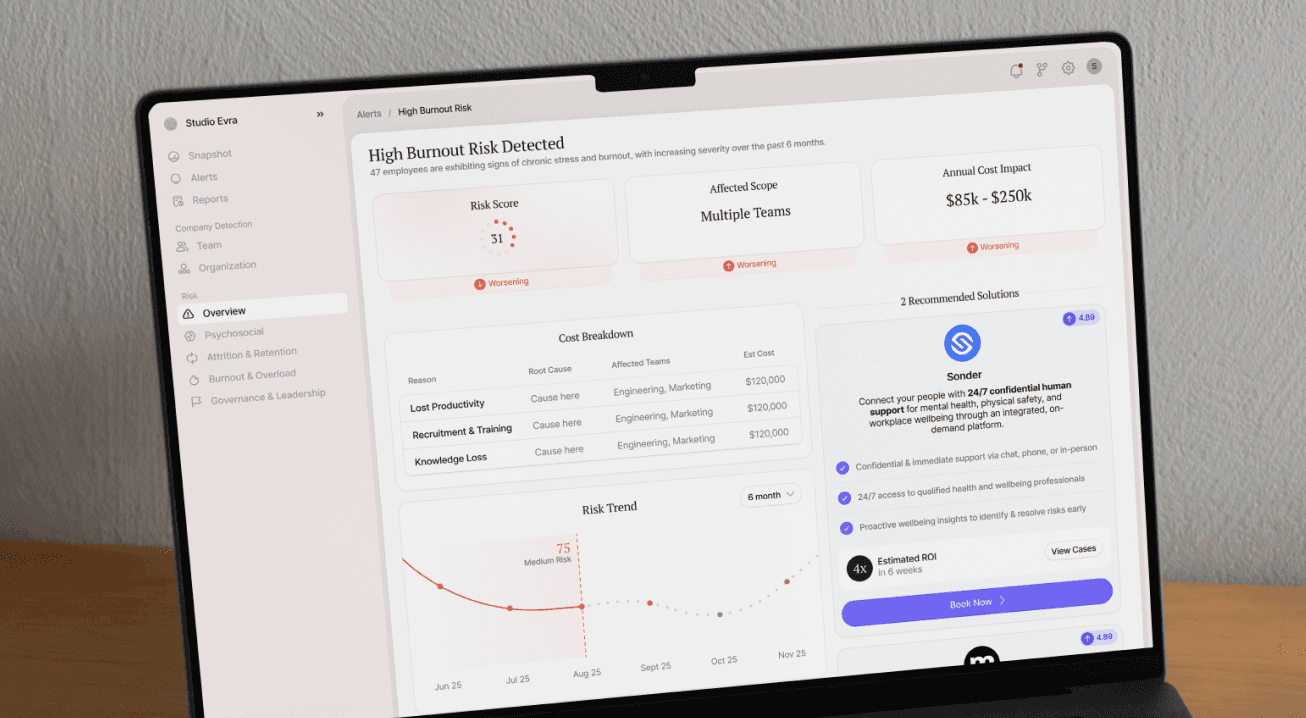
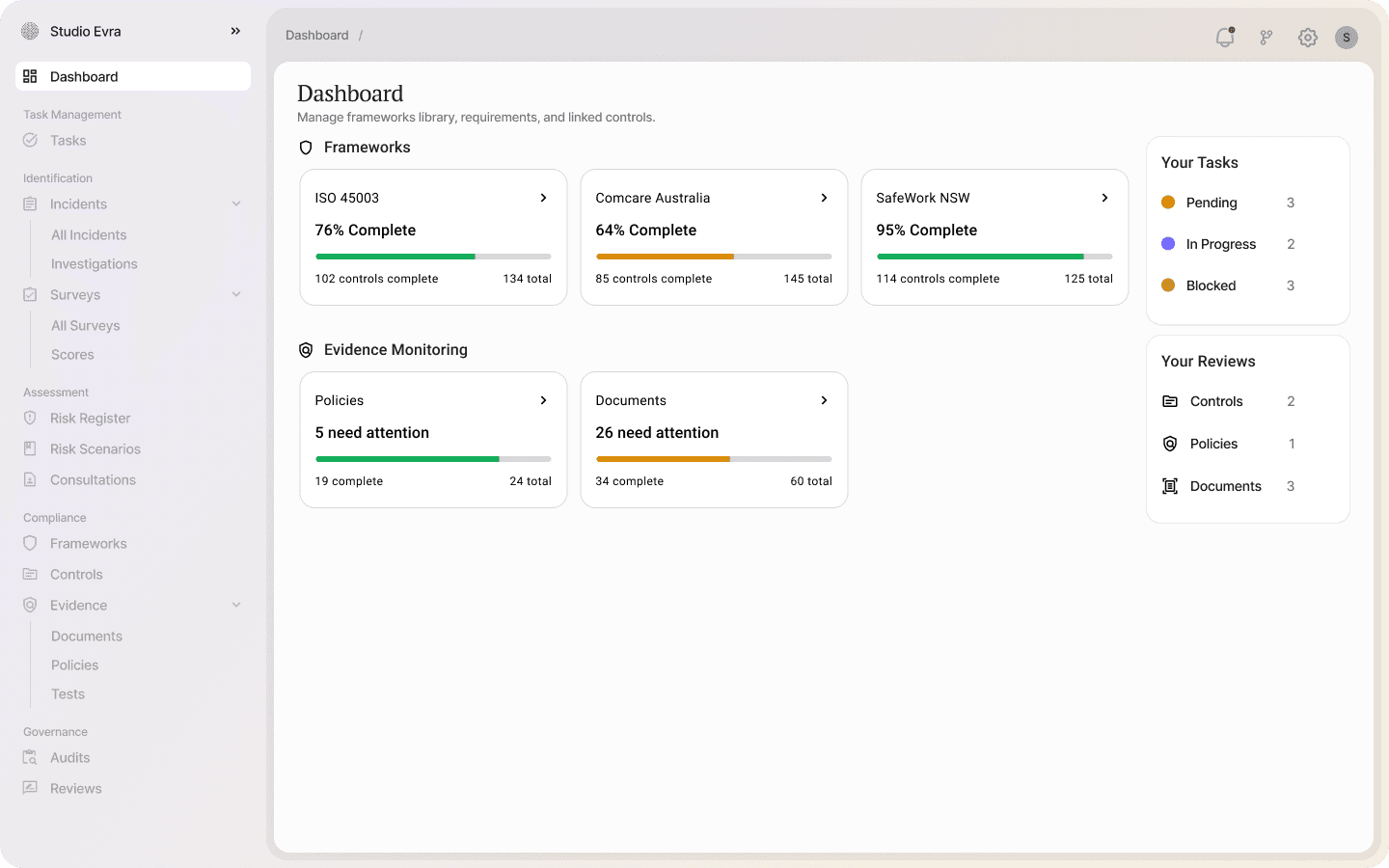
Psychosocial risks require the same rigor as physical hazards. ReFresh provides structured tools to document psychosocial hazard categories recognized by SafeWork Australia and ISO 45003, assess severity using a standardized risk matrix, and maintain a complete risk register with status tracking from identification through treatment to monitoring.

The challenge

Remove barriers to reporting with identity-protected submissions

Many employees hesitate to report psychosocial incidents due to fear of retaliation or judgment. ReFresh's confidential reporting ensures employees can raise concerns without their identity being exposed to your organisation, while still providing the information needed to investigate and address workplace hazards.

When employees choose confidential reporting, their identity is never disclosed to management, investigators, or HR teams within your organisation. This privacy-first design builds trust and increases reporting rates while maintaining the data integrity needed for effective incident management.

Comprehensive Coverage

Assess all recognized psychosocial hazards systematically

ReFresh structures risk assessment around the psychosocial hazard categories recognized by SafeWork Australia and ISO 45003. Each category includes subcategories and specific risk scenarios built into the platform's library. This framework ensures comprehensive hazard coverage and alignment with regulatory expectations for systematic risk management.

Change management

Work environment

Recognition and reward

Organisational justice

Change management

Work environment

Recognition and reward

Organisational justice

Change management

Work environment

Recognition and reward

Organisational justice

Job demands

Job control

Support systems

Workplace relationships

Job demands

Job control

Support systems

Workplace relationships

Job demands

Job control

Support systems

Workplace relationships

Complete Documentation

Capture every risk with full context and exposure details

When you identify a psychosocial hazard, ReFresh guides you through complete documentation. Record the hazard type, describe how it manifests in your workplace, identify exposure sources and triggers. Document which worker groups are affected, exposure frequency and duration, and existing controls already in place. This structured approach ensures consistent documentation quality.


Severity Rating

Apply standardized likelihood and consequence ratings

Every psychosocial risk receives objective assessment using a risk matrix methodology. Rate likelihood on a five-point scale from rare to almost certain. Assess consequence from insignificant to catastrophic. The combination determines overall risk rating as critical, high, medium, or low. This standardized approach ensures consistent severity assessment across teams and assessors.

Consequence severity criteria

Risk matrix rating

Inherent risk baseline

Residual risk post-controls

Consequence severity criteria

Risk matrix rating

Inherent risk baseline

Residual risk post-controls

Consequence severity criteria

Risk matrix rating

Inherent risk baseline

Residual risk post-controls

Control effectiveness

Demonstrate how your interventions reduce workplace risk

ReFresh requires dual risk rating. Inherent risk represents the baseline severity without any controls, showing the true hazard level. Residual risk shows severity after controls are implemented. This comparison demonstrates control effectiveness, supports control selection decisions, and shows regulators that your risk management approach is working.


Centralized Tracking

Track every risk from identification to closure

All logged and assessed risks flow into a comprehensive register with status workflow. Move risks through draft, identified, assessing, treating, monitoring, accepted, and closed stages. Assign owners with accountability. Set review dates and track completion. Filter by hazard category, severity, team, or status. Export for reporting and audit. Your risk register provides a complete, defensible record.

Owner assignment

Review scheduling

Export functionality

Dashboard view

Owner assignment

Review scheduling

Export functionality

Dashboard view

Owner assignment

Review scheduling

Export functionality

Dashboard view

End-to-end workflow

Connect risk assessment to detection inputs and control outputs

Risks identified through incident reports, survey results, workplace inspections, and worker consultations flow directly into the risk register. Each registered risk links to assigned controls, implementation evidence, and effectiveness reviews. This integration ensures risk assessment sits at the center of your psychosocial hazard management system.


Build a complete, auditable record of psychosocial risk management

Systematic documentation of all 17 psychosocial hazard categories. Consistent severity assessment using standardized risk matrix methodology. Centralized register with status tracking and owner accountability. Integration with detection and control processes. Audit-ready documentation demonstrating regulatory compliance.


GOT QUESTIONS?

Frequently asked questions

Frequently asked questions

What does psychosocial risk detection mean?

Psychosocial risk detection is the process of identifying psychosocial hazards, concerns, and early warning signs that may affect workers’ mental health and wellbeing. This includes capturing incidents, confidential concerns, and survey-based risk indicators so organisations can meet WHS obligations and act before harm occurs.

What does psychosocial risk detection mean?

Psychosocial risk detection is the process of identifying psychosocial hazards, concerns, and early warning signs that may affect workers’ mental health and wellbeing. This includes capturing incidents, confidential concerns, and survey-based risk indicators so organisations can meet WHS obligations and act before harm occurs.

How does ReFresh detect work?

ReFresh Detect provides structured detection pathways including psychosocial incident reporting, confidential risk intake, and compliance-aligned surveys. These inputs are centrally recorded and linked, giving organisations a clear, auditable view of psychosocial risk across teams, roles, and locations.

How does ReFresh detect work?

ReFresh Detect provides structured detection pathways including psychosocial incident reporting, confidential risk intake, and compliance-aligned surveys. These inputs are centrally recorded and linked, giving organisations a clear, auditable view of psychosocial risk across teams, roles, and locations.

What is the objective of the Detect module?

The objective of Detect is to help organisations identify psychosocial risk early, maintain visibility over foreseeable hazards, and create documented evidence aligned with WHS duties. Detect ensures risks are identified consistently and are ready to be assessed, controlled, and managed.

What is the objective of the Detect module?

The objective of Detect is to help organisations identify psychosocial risk early, maintain visibility over foreseeable hazards, and create documented evidence aligned with WHS duties. Detect ensures risks are identified consistently and are ready to be assessed, controlled, and managed.

What problem does psychosocial risk detection solve?

Many organisations rely on fragmented surveys, inbox reports, or informal disclosures that create blind spots and compliance risk. ReFresh Detect replaces these with a structured system that captures, documents, and links psychosocial risk data in one place.

What problem does psychosocial risk detection solve?

Many organisations rely on fragmented surveys, inbox reports, or informal disclosures that create blind spots and compliance risk. ReFresh Detect replaces these with a structured system that captures, documents, and links psychosocial risk data in one place.

Is ReFresh Detect compliant with WHS requirements?

Yes. ReFresh Detect is designed to align with ISO 45003, Safe Work Australia guidance, Comcare expectations, and state-based WHS psychosocial regulations. Detection activity is documented to support audits, regulator enquiries, and board oversight.

Is ReFresh Detect compliant with WHS requirements?

Yes. ReFresh Detect is designed to align with ISO 45003, Safe Work Australia guidance, Comcare expectations, and state-based WHS psychosocial regulations. Detection activity is documented to support audits, regulator enquiries, and board oversight.

Is reporting confidential for workers?

Yes. Psychosocial incident reporting and confidential risk intake are designed to protect worker privacy and psychological safety. Access controls and structured workflows ensure sensitive information is handled appropriately while still providing duty holders with necessary visibility.

Is reporting confidential for workers?

Yes. Psychosocial incident reporting and confidential risk intake are designed to protect worker privacy and psychological safety. Access controls and structured workflows ensure sensitive information is handled appropriately while still providing duty holders with necessary visibility.

Can we use only the Detect module?

Yes. ReFresh Detect can be used as a standalone module or as part of the broader Detect, Assess, Control, Manage workflow. Many organisations start with Detect and expand as their psychosocial risk management maturity grows.

Can we use only the Detect module?

Yes. ReFresh Detect can be used as a standalone module or as part of the broader Detect, Assess, Control, Manage workflow. Many organisations start with Detect and expand as their psychosocial risk management maturity grows.

Does ReFresh use automated or AI-based detection?

No. ReFresh Detect does not automatically monitor or infer psychosocial risk. Detection is based on structured surveys, incident reporting, and confidential intake processes to ensure accuracy, transparency, and regulatory defensibility.

Does ReFresh use automated or AI-based detection?

No. ReFresh Detect does not automatically monitor or infer psychosocial risk. Detection is based on structured surveys, incident reporting, and confidential intake processes to ensure accuracy, transparency, and regulatory defensibility.

How does Detect support audits and regulator requests?

All detection activity is time-stamped, structured, and centrally recorded. This creates a clear audit trail that demonstrates how psychosocial risks were identified, reviewed, and escalated in line with WHS obligations.

How does Detect support audits and regulator requests?

All detection activity is time-stamped, structured, and centrally recorded. This creates a clear audit trail that demonstrates how psychosocial risks were identified, reviewed, and escalated in line with WHS obligations.

GOT QUESTIONS?

Frequently asked questions

What does psychosocial risk detection mean?

Psychosocial risk detection is the process of identifying psychosocial hazards, concerns, and early warning signs that may affect workers’ mental health and wellbeing. This includes capturing incidents, confidential concerns, and survey-based risk indicators so organisations can meet WHS obligations and act before harm occurs.

How does ReFresh detect work?

ReFresh Detect provides structured detection pathways including psychosocial incident reporting, confidential risk intake, and compliance-aligned surveys. These inputs are centrally recorded and linked, giving organisations a clear, auditable view of psychosocial risk across teams, roles, and locations.

What is the objective of the Detect module?

The objective of Detect is to help organisations identify psychosocial risk early, maintain visibility over foreseeable hazards, and create documented evidence aligned with WHS duties. Detect ensures risks are identified consistently and are ready to be assessed, controlled, and managed.

What problem does psychosocial risk detection solve?

Many organisations rely on fragmented surveys, inbox reports, or informal disclosures that create blind spots and compliance risk. ReFresh Detect replaces these with a structured system that captures, documents, and links psychosocial risk data in one place.

Is ReFresh Detect compliant with WHS requirements?

Yes. ReFresh Detect is designed to align with ISO 45003, Safe Work Australia guidance, Comcare expectations, and state-based WHS psychosocial regulations. Detection activity is documented to support audits, regulator enquiries, and board oversight.

Is reporting confidential for workers?

Yes. Psychosocial incident reporting and confidential risk intake are designed to protect worker privacy and psychological safety. Access controls and structured workflows ensure sensitive information is handled appropriately while still providing duty holders with necessary visibility.

Can we use only the Detect module?

Yes. ReFresh Detect can be used as a standalone module or as part of the broader Detect, Assess, Control, Manage workflow. Many organisations start with Detect and expand as their psychosocial risk management maturity grows.

Does ReFresh use automated or AI-based detection?

No. ReFresh Detect does not automatically monitor or infer psychosocial risk. Detection is based on structured surveys, incident reporting, and confidential intake processes to ensure accuracy, transparency, and regulatory defensibility.

How does Detect support audits and regulator requests?

All detection activity is time-stamped, structured, and centrally recorded. This creates a clear audit trail that demonstrates how psychosocial risks were identified, reviewed, and escalated in line with WHS obligations.

Don't just measure risk. Prevent it

Bring emotional, psychosocial, and leadership risk into one unified framework.

Don't just measure risk. Prevent it

Bring emotional, psychosocial, and leadership risk into one unified framework.

Don't just measure risk. Prevent it

Bring emotional, psychosocial, and leadership risk into one unified framework.