Psychosocial Risk Surveys

Measure psychosocial risks with validated, evidence-based surveys

Measure psychosocial risks with validated, evidence-based surveys

Measure psychosocial risks with validated, evidence-based surveys

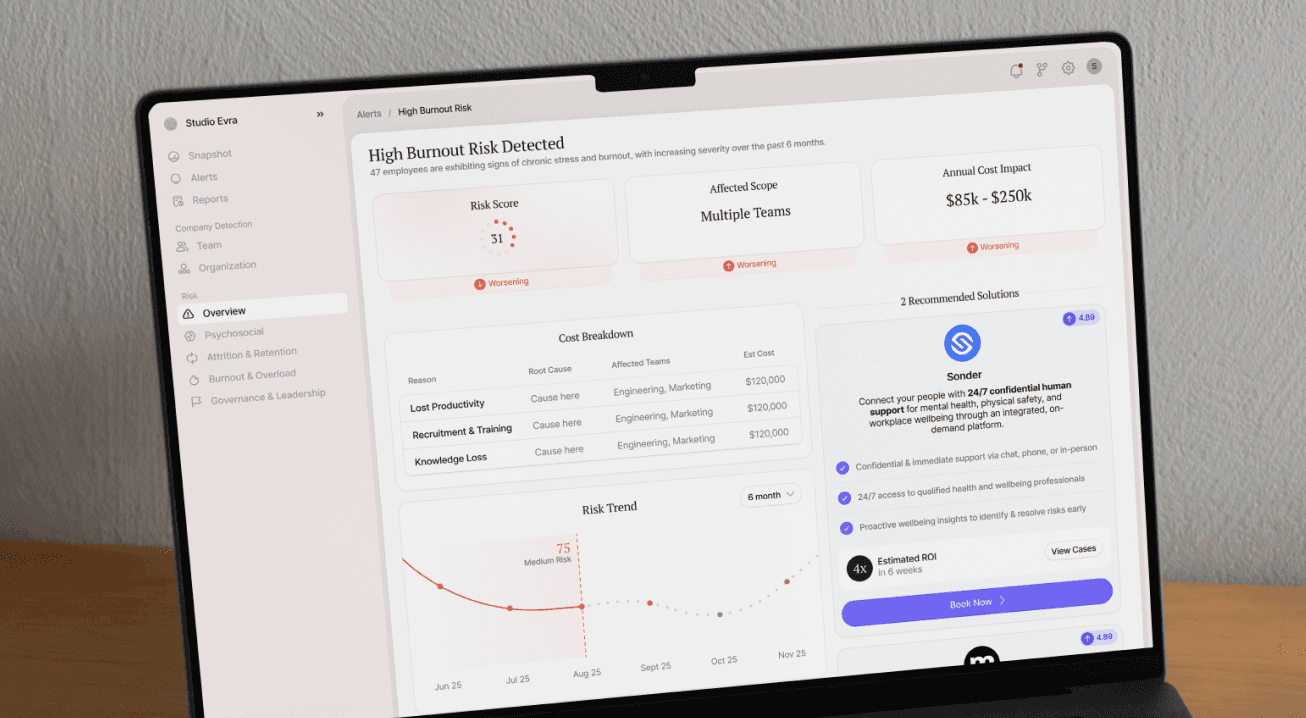
ReFresh's psychosocial risk surveys provide a scientifically rigorous way to assess all 17 hazard categories across your organisation. With weighted scoring methodology, confidential participation, and comparative analysis, you'll identify which risks need immediate attention and demonstrate continuous improvement in your WHS compliance.


Evidence-Based

Deploy surveys built on workplace psychology research

ReFresh's surveys are designed using evidence-based psychosocial risk assessment methodologies aligned with Australian WHS standards and informed by established workplace psychology research. Questions are carefully worded to be clear, unbiased, and comprehensive across all 17 psychosocial hazard categories.

This research-informed foundation means your survey data supports evidence-based decision making and meets the documentation requirements for regulatory compliance.

Prioritisation

Identify which risks need immediate attention

Not all psychosocial risks are equal in their potential impact. ReFresh's weighted scoring methodology helps you understand the relative severity of different hazards across your organisation, making it easier to prioritise resources and interventions.

Scores are calculated across each of the 17 hazard categories, giving you a detailed risk profile. You can view scores at organisation-wide, department, team, or location levels to identify where targeted action is most needed.

Weighted scoring

Multi-level analysis

Risk prioritisation

Comparative benchmarking

Weighted scoring

Multi-level analysis

Risk prioritisation

Comparative benchmarking

Weighted scoring

Multi-level analysis

Risk prioritisation

Comparative benchmarking

Honest Feedback

Encourage truthful responses through protected confidentiality

Employees are more likely to provide honest feedback about psychosocial risks when they know their individual responses will never be exposed to your organisation. ReFresh's surveys protect participant identity - individual responses are never disclosed to management, and results are only reported in aggregate when group sizes meet minimum thresholds.

This confidentiality-first approach increases participation rates and response quality, giving you more accurate insights into workplace psychosocial risks. Employees can answer sensitive questions about management practices, workload, bullying, and other difficult topics without fear of their employer identifying their specific responses.

Identity protected

Aggregate reporting only

Higher participation rates

Honest, candid responses

Identity protected

Aggregate reporting only

Higher participation rates

Honest, candid responses

Identity protected

Aggregate reporting only

Higher participation rates

Honest, candid responses

Targeted Assessment

Deploy surveys organisation-wide or to specific groups

Different situations call for different survey approaches. ReFresh allows you to deploy surveys to your entire organisation for baseline assessment, to specific departments or teams for targeted evaluation, or on rolling schedules for continuous monitoring.

You can schedule surveys to run annually for comprehensive psychosocial risk assessments, quarterly for pulse checks, or after significant organisational changes like restructures or leadership transitions. Multiple concurrent surveys can run to different groups without overlap or confusion.

Insights to Action

Transform survey data into risk management strategies

Survey results are presented in clear, actionable reports that highlight priority areas for intervention. Compare scores across teams to identify where resources are most needed. Track changes over time to demonstrate improvement. Export data for WHS reporting or executive presentations.

Reports break down results by each of the 17 psychosocial hazard categories, making it easy to identify specific issues like high workload demands, poor role clarity, or inadequate support. This granular insight enables targeted interventions rather than generic wellness programs.

Demonstrate Progress

Show measurable improvement in psychosocial risk management

Regular psychosocial risk surveys create a data trail that demonstrates your organisation's commitment to continuous improvement. Track how risk scores change after interventions. Identify emerging risks before they escalate. Provide evidence to regulators that you're actively managing psychosocial hazards.

ReFresh's survey history and trend analysis tools make it easy to show year-over-year improvement, justify resource allocation for psychosocial risk programs, and communicate progress to leadership, employees, and external stakeholders.


Evidence-based assessment for WHS compliance

ReFresh's psychosocial risk surveys give you the data you need to identify risks, prioritise action, and demonstrate continuous improvement. With validated methodology, weighted scoring, and confidential participation, you'll meet your WHS obligations while building employee trust in your psychosocial risk management approach.

Validated methodology

Weighted prioritisation

Confidential participation

Continuous improvement

Validated methodology

Weighted prioritisation

Confidential participation

Continuous improvement

Validated methodology

Weighted prioritisation

Confidential participation

Continuous improvement

Psychosocial hazards

Psychosocial hazards are aspects of work which have the potential to cause psychological or physical harm. The Managing Psychosocial Hazards at Work Code of Practice 2024 identifies 17 psychosocial hazards. This section provides information on what they are, the risks they pose and how to eliminate or minimise them in your workplace.

Find your psychosocial compliance gaps in 24 hoursGet clarity on your psychosocial risk position in 24 hours


Psychosocial hazards are aspects of work which have the potential to cause psychological or physical harm. The Managing Psychosocial Hazards at Work Code of Practice 2024 identifies 17 psychosocial hazards. This section provides information on what they are, the risks they pose and how to eliminate or minimise them in your workplace.

Psychosocial hazards

Psychosocial hazards are aspects of work which have the potential to cause psychological or physical harm. The Managing Psychosocial Hazards at Work Code of Practice 2024 identifies 17 psychosocial hazards. This section provides information on what they are, the risks they pose and how to eliminate or minimise them in your workplace.

GOT QUESTIONS?

Frequently asked questions

Frequently asked questions

What does psychosocial risk detection mean?

Psychosocial risk detection is the process of identifying psychosocial hazards, concerns, and early warning signs that may affect workers’ mental health and wellbeing. This includes capturing incidents, confidential concerns, and survey-based risk indicators so organisations can meet WHS obligations and act before harm occurs.

What does psychosocial risk detection mean?

Psychosocial risk detection is the process of identifying psychosocial hazards, concerns, and early warning signs that may affect workers’ mental health and wellbeing. This includes capturing incidents, confidential concerns, and survey-based risk indicators so organisations can meet WHS obligations and act before harm occurs.

How does ReFresh detect work?

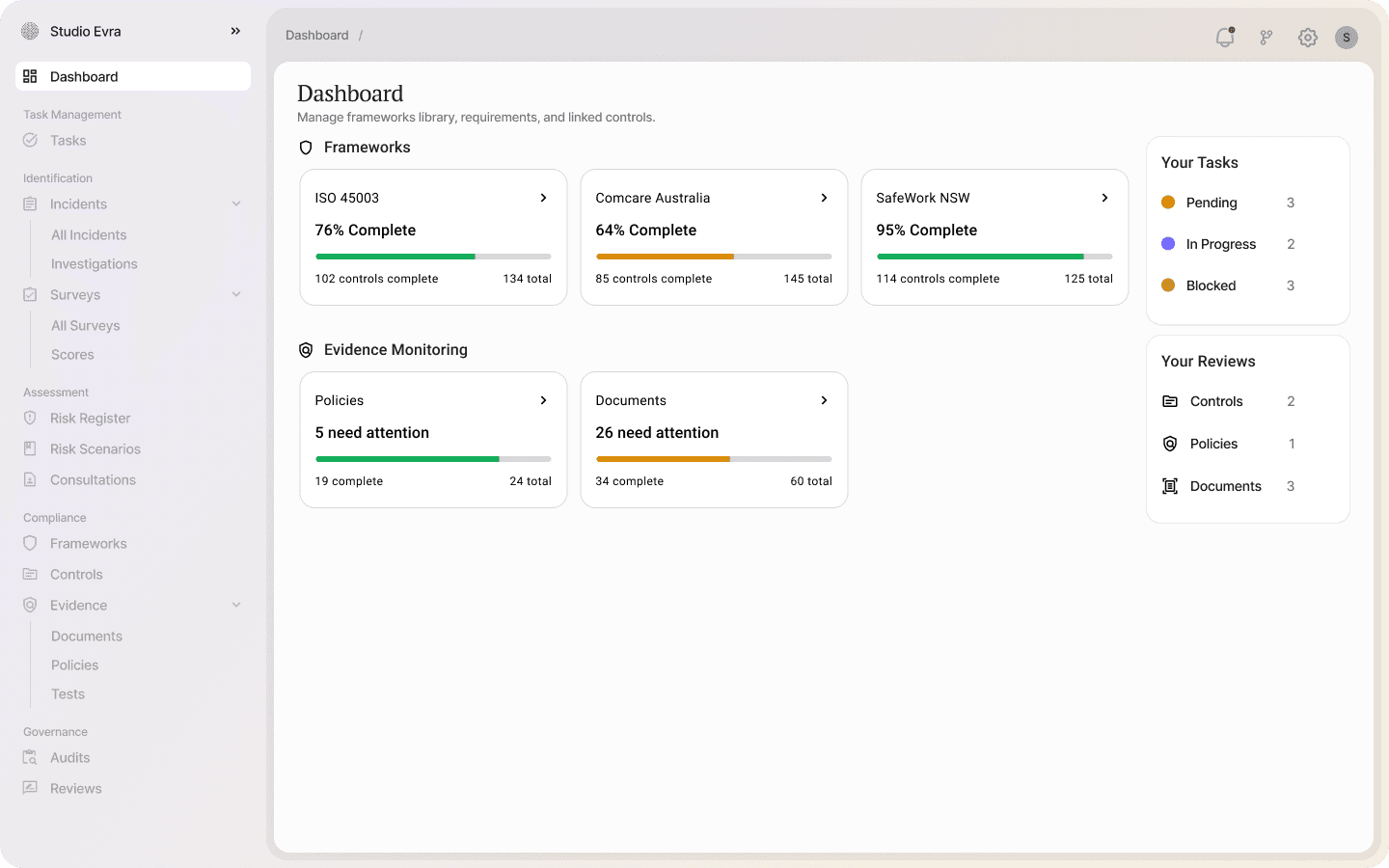
ReFresh Detect provides structured detection pathways including psychosocial incident reporting, confidential risk intake, and compliance-aligned surveys. These inputs are centrally recorded and linked, giving organisations a clear, auditable view of psychosocial risk across teams, roles, and locations.

How does ReFresh detect work?

ReFresh Detect provides structured detection pathways including psychosocial incident reporting, confidential risk intake, and compliance-aligned surveys. These inputs are centrally recorded and linked, giving organisations a clear, auditable view of psychosocial risk across teams, roles, and locations.

What is the objective of the Detect module?

The objective of Detect is to help organisations identify psychosocial risk early, maintain visibility over foreseeable hazards, and create documented evidence aligned with WHS duties. Detect ensures risks are identified consistently and are ready to be assessed, controlled, and managed.

What is the objective of the Detect module?

The objective of Detect is to help organisations identify psychosocial risk early, maintain visibility over foreseeable hazards, and create documented evidence aligned with WHS duties. Detect ensures risks are identified consistently and are ready to be assessed, controlled, and managed.

What problem does psychosocial risk detection solve?

Many organisations rely on fragmented surveys, inbox reports, or informal disclosures that create blind spots and compliance risk. ReFresh Detect replaces these with a structured system that captures, documents, and links psychosocial risk data in one place.

What problem does psychosocial risk detection solve?

Many organisations rely on fragmented surveys, inbox reports, or informal disclosures that create blind spots and compliance risk. ReFresh Detect replaces these with a structured system that captures, documents, and links psychosocial risk data in one place.

Is ReFresh Detect compliant with WHS requirements?

Yes. ReFresh Detect is designed to align with ISO 45003, Safe Work Australia guidance, Comcare expectations, and state-based WHS psychosocial regulations. Detection activity is documented to support audits, regulator enquiries, and board oversight.

Is ReFresh Detect compliant with WHS requirements?

Yes. ReFresh Detect is designed to align with ISO 45003, Safe Work Australia guidance, Comcare expectations, and state-based WHS psychosocial regulations. Detection activity is documented to support audits, regulator enquiries, and board oversight.

Is reporting confidential for workers?

Yes. Psychosocial incident reporting and confidential risk intake are designed to protect worker privacy and psychological safety. Access controls and structured workflows ensure sensitive information is handled appropriately while still providing duty holders with necessary visibility.

Is reporting confidential for workers?

Yes. Psychosocial incident reporting and confidential risk intake are designed to protect worker privacy and psychological safety. Access controls and structured workflows ensure sensitive information is handled appropriately while still providing duty holders with necessary visibility.

Can we use only the Detect module?

Yes. ReFresh Detect can be used as a standalone module or as part of the broader Detect, Assess, Control, Manage workflow. Many organisations start with Detect and expand as their psychosocial risk management maturity grows.

Can we use only the Detect module?

Yes. ReFresh Detect can be used as a standalone module or as part of the broader Detect, Assess, Control, Manage workflow. Many organisations start with Detect and expand as their psychosocial risk management maturity grows.

Does ReFresh use automated or AI-based detection?

No. ReFresh Detect does not automatically monitor or infer psychosocial risk. Detection is based on structured surveys, incident reporting, and confidential intake processes to ensure accuracy, transparency, and regulatory defensibility.

Does ReFresh use automated or AI-based detection?

No. ReFresh Detect does not automatically monitor or infer psychosocial risk. Detection is based on structured surveys, incident reporting, and confidential intake processes to ensure accuracy, transparency, and regulatory defensibility.

How does Detect support audits and regulator requests?

All detection activity is time-stamped, structured, and centrally recorded. This creates a clear audit trail that demonstrates how psychosocial risks were identified, reviewed, and escalated in line with WHS obligations.

How does Detect support audits and regulator requests?

All detection activity is time-stamped, structured, and centrally recorded. This creates a clear audit trail that demonstrates how psychosocial risks were identified, reviewed, and escalated in line with WHS obligations.

GOT QUESTIONS?

Frequently asked questions

What does psychosocial risk detection mean?

Psychosocial risk detection is the process of identifying psychosocial hazards, concerns, and early warning signs that may affect workers’ mental health and wellbeing. This includes capturing incidents, confidential concerns, and survey-based risk indicators so organisations can meet WHS obligations and act before harm occurs.

How does ReFresh detect work?

ReFresh Detect provides structured detection pathways including psychosocial incident reporting, confidential risk intake, and compliance-aligned surveys. These inputs are centrally recorded and linked, giving organisations a clear, auditable view of psychosocial risk across teams, roles, and locations.

What is the objective of the Detect module?

The objective of Detect is to help organisations identify psychosocial risk early, maintain visibility over foreseeable hazards, and create documented evidence aligned with WHS duties. Detect ensures risks are identified consistently and are ready to be assessed, controlled, and managed.

What problem does psychosocial risk detection solve?

Many organisations rely on fragmented surveys, inbox reports, or informal disclosures that create blind spots and compliance risk. ReFresh Detect replaces these with a structured system that captures, documents, and links psychosocial risk data in one place.

Is ReFresh Detect compliant with WHS requirements?

Yes. ReFresh Detect is designed to align with ISO 45003, Safe Work Australia guidance, Comcare expectations, and state-based WHS psychosocial regulations. Detection activity is documented to support audits, regulator enquiries, and board oversight.

Is reporting confidential for workers?

Yes. Psychosocial incident reporting and confidential risk intake are designed to protect worker privacy and psychological safety. Access controls and structured workflows ensure sensitive information is handled appropriately while still providing duty holders with necessary visibility.

Can we use only the Detect module?

Yes. ReFresh Detect can be used as a standalone module or as part of the broader Detect, Assess, Control, Manage workflow. Many organisations start with Detect and expand as their psychosocial risk management maturity grows.

Does ReFresh use automated or AI-based detection?

No. ReFresh Detect does not automatically monitor or infer psychosocial risk. Detection is based on structured surveys, incident reporting, and confidential intake processes to ensure accuracy, transparency, and regulatory defensibility.

How does Detect support audits and regulator requests?

All detection activity is time-stamped, structured, and centrally recorded. This creates a clear audit trail that demonstrates how psychosocial risks were identified, reviewed, and escalated in line with WHS obligations.

Don't just measure risk. Prevent it

Bring emotional, psychosocial, and leadership risk into one unified framework.

Don't just measure risk. Prevent it

Bring emotional, psychosocial, and leadership risk into one unified framework.

Don't just measure risk. Prevent it

Bring emotional, psychosocial, and leadership risk into one unified framework.