Health and aged care
Your workforce faces the highest psychosocial exposure of any sector. ReFresh manages the complexity so your team manages the people.
ReFresh is the psychosocial operating system that turns the complexity of multi-site, multi-jurisdiction psychosocial safety into a system that runs, giving your safety and people teams their time back by handling the documentation, evidence, and governance reporting the regulation requires.
Health and aged care
Your workforce faces the highest psychosocial exposure of any sector. ReFresh manages the complexity so your team manages the people.
ReFresh is the psychosocial operating system that turns the complexity of multi-site, multi-jurisdiction psychosocial safety into a system that runs, giving your safety and people teams their time back by handling the documentation, evidence, and governance reporting the regulation requires.
trusted by leading ASX & Global enterprises













trusted by leading ASX & Global enterprises
FEATURES
One psychosocial OS across every site, care setting, and jurisdiction
ReFresh is the psychosocial operating system that maintains consistent risk intelligence, safety orchestration, and governance evidence across hospitals, aged care facilities, community health, and allied health settings, regardless of how many sites the organisation operates or how many states those sites span. Healthcare psychosocial safety is the most operationally complex of any sector because each care setting has a different workforce composition, different shift patterns, different patient populations, and different hazard profiles, and the regulations vary by jurisdiction under the Code of Practice.
The OS handles that complexity by providing location-scoped hazard identification and control tracking with jurisdictional compliance mapping between NSW, Victoria, and other states within a single consolidated view. Instead of each site assembling its own compliance picture through disconnected policies and incident logs, the operating system runs the identification, assessment, control, and review cycle continuously across every care setting, producing the evidence as a byproduct of the management process. Your safety and people teams stop managing the patchwork and start managing the people.
Hospitals, aged care, community health, and allied health in one system
Jurisdiction-aware compliance mapping across states
Location-scoped hazard identification by care setting
Consolidated organisational view from a single operating system
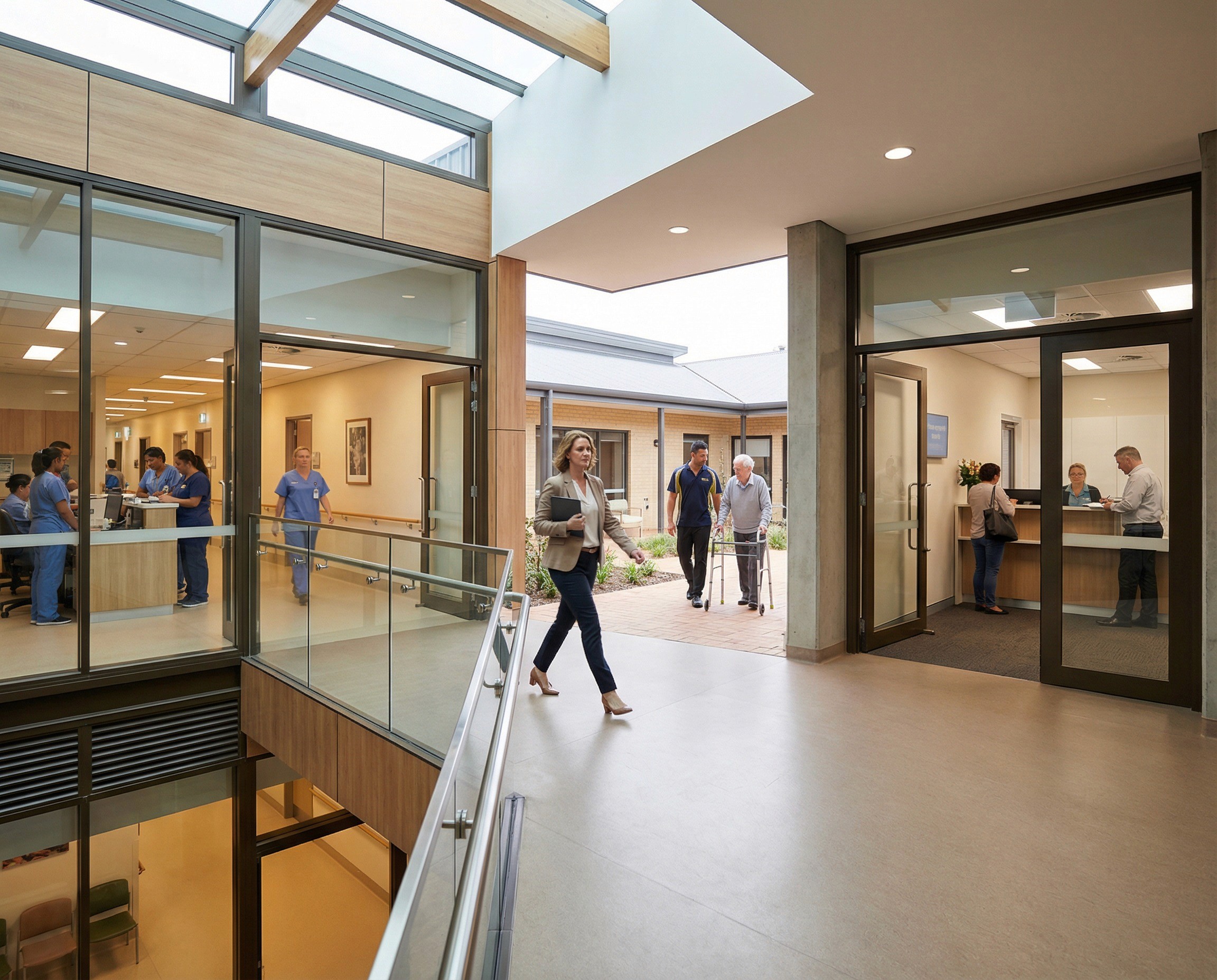
One psychosocial OS across every site, care setting, and jurisdiction
ReFresh is the psychosocial operating system that maintains consistent risk intelligence, safety orchestration, and governance evidence across hospitals, aged care facilities, community health, and allied health settings, regardless of how many sites the organisation operates or how many states those sites span. Healthcare psychosocial safety is the most operationally complex of any sector because each care setting has a different workforce composition, different shift patterns, different patient populations, and different hazard profiles, and the regulations vary by jurisdiction under the Code of Practice.
The OS handles that complexity by providing location-scoped hazard identification and control tracking with jurisdictional compliance mapping between NSW, Victoria, and other states within a single consolidated view. Instead of each site assembling its own compliance picture through disconnected policies and incident logs, the operating system runs the identification, assessment, control, and review cycle continuously across every care setting, producing the evidence as a byproduct of the management process. Your safety and people teams stop managing the patchwork and start managing the people.
Hospitals, aged care, community health, and allied health in one system
Jurisdiction-aware compliance mapping across states
Location-scoped hazard identification by care setting
Consolidated organisational view from a single operating system
The ReFresh OS identifies the hazards healthcare workers face every day, systematically
ReFresh provides risk intelligence across the psychosocial hazards most acute in healthcare: job demands and workload, fatigue from shift-based rosters, traumatic events and material exposure, violence and aggression from patients and families, poor support, low job control, inadequate recognition, and harassment. These hazards interact and compound in patterns specific to healthcare, where the demand-control-support model is acute: high demands that are patient-driven, low control because work is shift-based, and variable support that fluctuates with staffing levels. Fatigue compounds every other hazard.
The OS identifies these hazards by prevalence and severity across roles, shifts, care settings, and locations, moving the organisation from reactive incident response to systematic identification. This is the distinction the regulation draws: having policies is not the same as having a system that demonstrates those policies are being operationalised continuously. Aged care faces additional pressures from staffing shortages, high turnover, and post-Royal Commission scrutiny. The OS is built for this complexity rather than adapted from a physical safety system that handles it as an afterthought.
Fatigue, trauma, violence, workload, and support hazards assessed
Severity and frequency scoring across roles, shifts, and locations
Hazard interaction and compounding effects captured
Systematic identification replacing reactive incident response
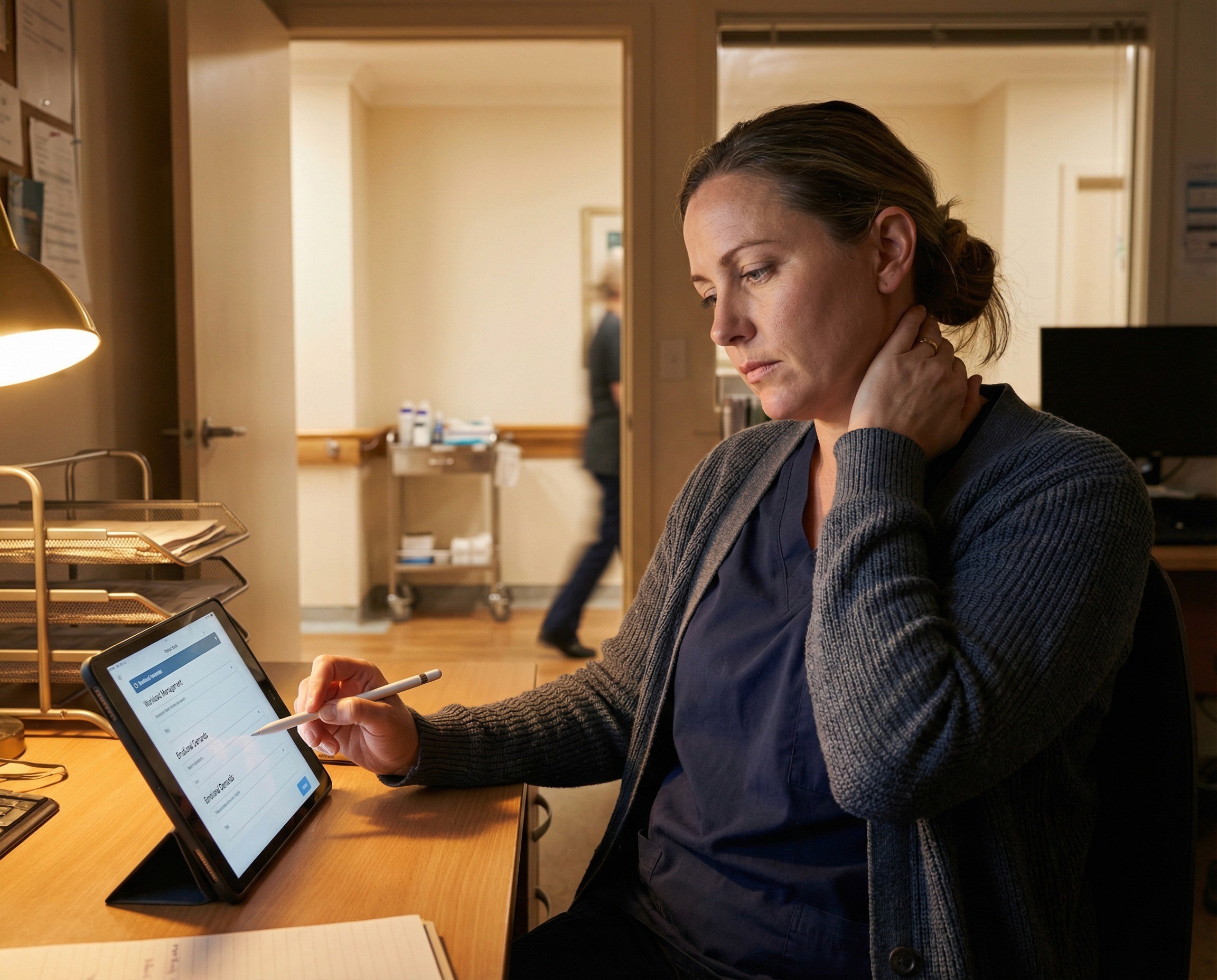
The ReFresh OS identifies the hazards healthcare workers face every day, systematically
ReFresh provides risk intelligence across the psychosocial hazards most acute in healthcare: job demands and workload, fatigue from shift-based rosters, traumatic events and material exposure, violence and aggression from patients and families, poor support, low job control, inadequate recognition, and harassment. These hazards interact and compound in patterns specific to healthcare, where the demand-control-support model is acute: high demands that are patient-driven, low control because work is shift-based, and variable support that fluctuates with staffing levels. Fatigue compounds every other hazard.
The OS identifies these hazards by prevalence and severity across roles, shifts, care settings, and locations, moving the organisation from reactive incident response to systematic identification. This is the distinction the regulation draws: having policies is not the same as having a system that demonstrates those policies are being operationalised continuously. Aged care faces additional pressures from staffing shortages, high turnover, and post-Royal Commission scrutiny. The OS is built for this complexity rather than adapted from a physical safety system that handles it as an afterthought.
Fatigue, trauma, violence, workload, and support hazards assessed
Severity and frequency scoring across roles, shifts, and locations
Hazard interaction and compounding effects captured
Systematic identification replacing reactive incident response
From policies to a system that demonstrates continuous management
ReFresh turns psychosocial risk policies into a continuously running operating system that produces the evidence a regulator expects on demand. Most healthcare organisations can point to policies, incident systems, and support programmes. A regulator will ask whether those policies are being implemented consistently across every site, whether controls have named owners, whether effectiveness is monitored, and whether the organisation can produce a time-stamped audit trail from identification through to review. The gap between having policies and being able to demonstrate continuous management under inspection is where most healthcare organisations are exposed.
The cost of that exposure is the highest of any sector. Healthcare and social assistance has the highest volume of psychological injury claims in Australia. The average serious claim costs $288,542, mental health claims represent 12% of total claims but account for 38% of costs, and claims take five times longer to resolve than physical injuries. The OS closes the gap between policy and evidence by running the full lifecycle continuously, so the evidence exists when the question is asked rather than being assembled retrospectively after the regulator has already arrived.
Continuous evidence cycle from identification through review
Time-stamped audit trail produced as a byproduct
Control ownership, effectiveness, and review documented
Evidence ready on demand when regulators arrive
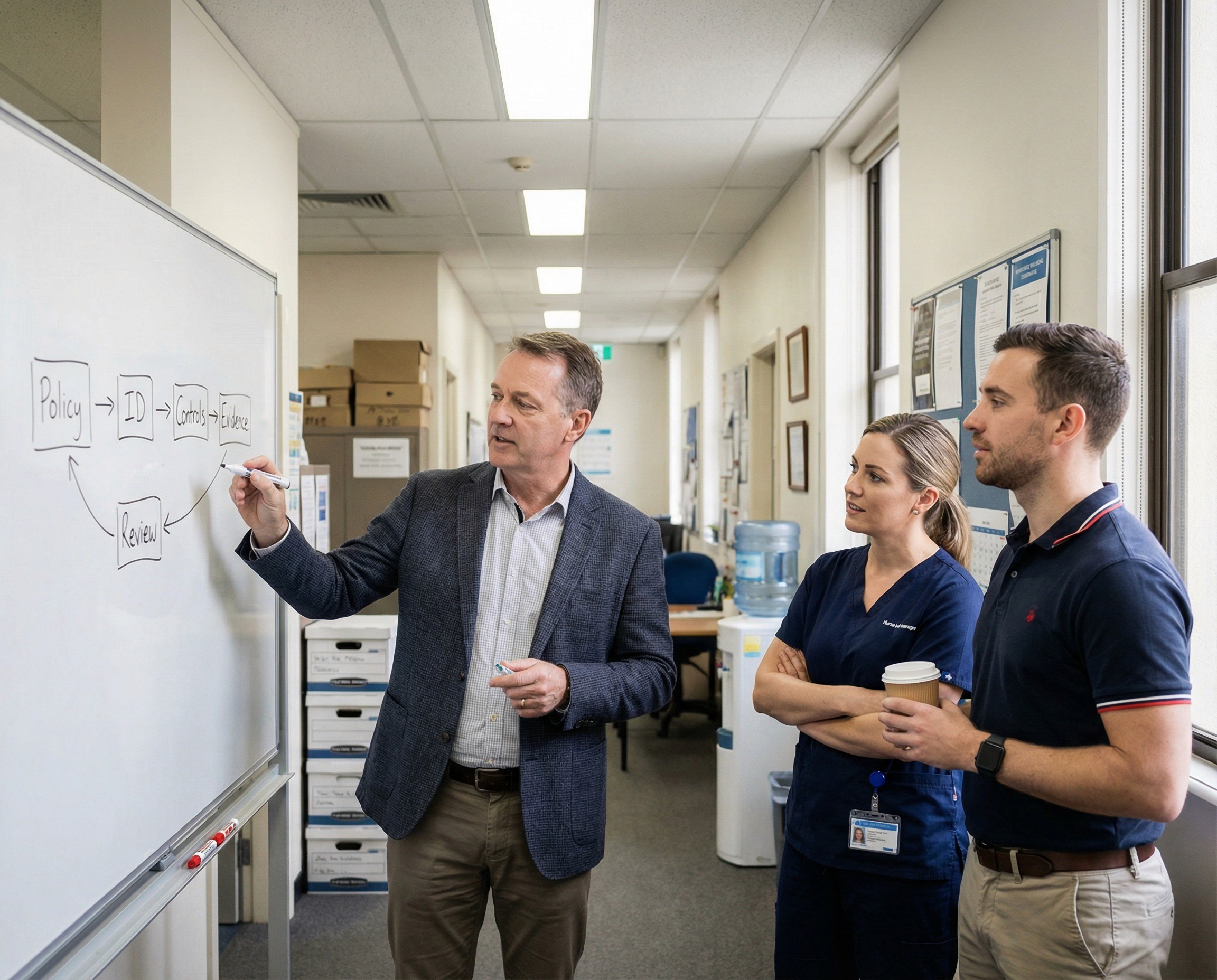
From policies to a system that demonstrates continuous management
ReFresh turns psychosocial risk policies into a continuously running operating system that produces the evidence a regulator expects on demand. Most healthcare organisations can point to policies, incident systems, and support programmes. A regulator will ask whether those policies are being implemented consistently across every site, whether controls have named owners, whether effectiveness is monitored, and whether the organisation can produce a time-stamped audit trail from identification through to review. The gap between having policies and being able to demonstrate continuous management under inspection is where most healthcare organisations are exposed.
The cost of that exposure is the highest of any sector. Healthcare and social assistance has the highest volume of psychological injury claims in Australia. The average serious claim costs $288,542, mental health claims represent 12% of total claims but account for 38% of costs, and claims take five times longer to resolve than physical injuries. The OS closes the gap between policy and evidence by running the full lifecycle continuously, so the evidence exists when the question is asked rather than being assembled retrospectively after the regulator has already arrived.
Continuous evidence cycle from identification through review
Time-stamped audit trail produced as a byproduct
Control ownership, effectiveness, and review documented
Evidence ready on demand when regulators arrive
ReFresh runs alongside your existing WHS and clinical systems
ReFresh operates alongside SafetyCulture, Donesafe, RiskMan, VHIMS, or any existing WHS and clinical incident system as the dedicated psychosocial layer. Incidents with a psychosocial dimension flow from your existing systems into the OS for structured investigation, root cause analysis, and connection to the psychosocial risk register and control framework. Clinical incident management and physical safety management continue in the systems your teams already use. The OS handles what those systems were not designed for.
For healthcare organisations with governance obligations to a board, the OS generates governance-level reporting that aggregates risk data across all sites, care settings, and jurisdictions without exposing individual detail or clinical information. Directors and officers carry personal due diligence obligations under the WHS Act. The OS produces the evidence trail that supports those obligations across the full scope of the organisation's operations, continuously, so the board has confidence without requiring the safety team to build a separate governance reporting process.
API-forward approach with integrations to major WHS platforms
Psychosocial incidents routed from clinical and WHS systems
Governance reporting across all sites without individual detail
Officer due diligence evidence produced continuously
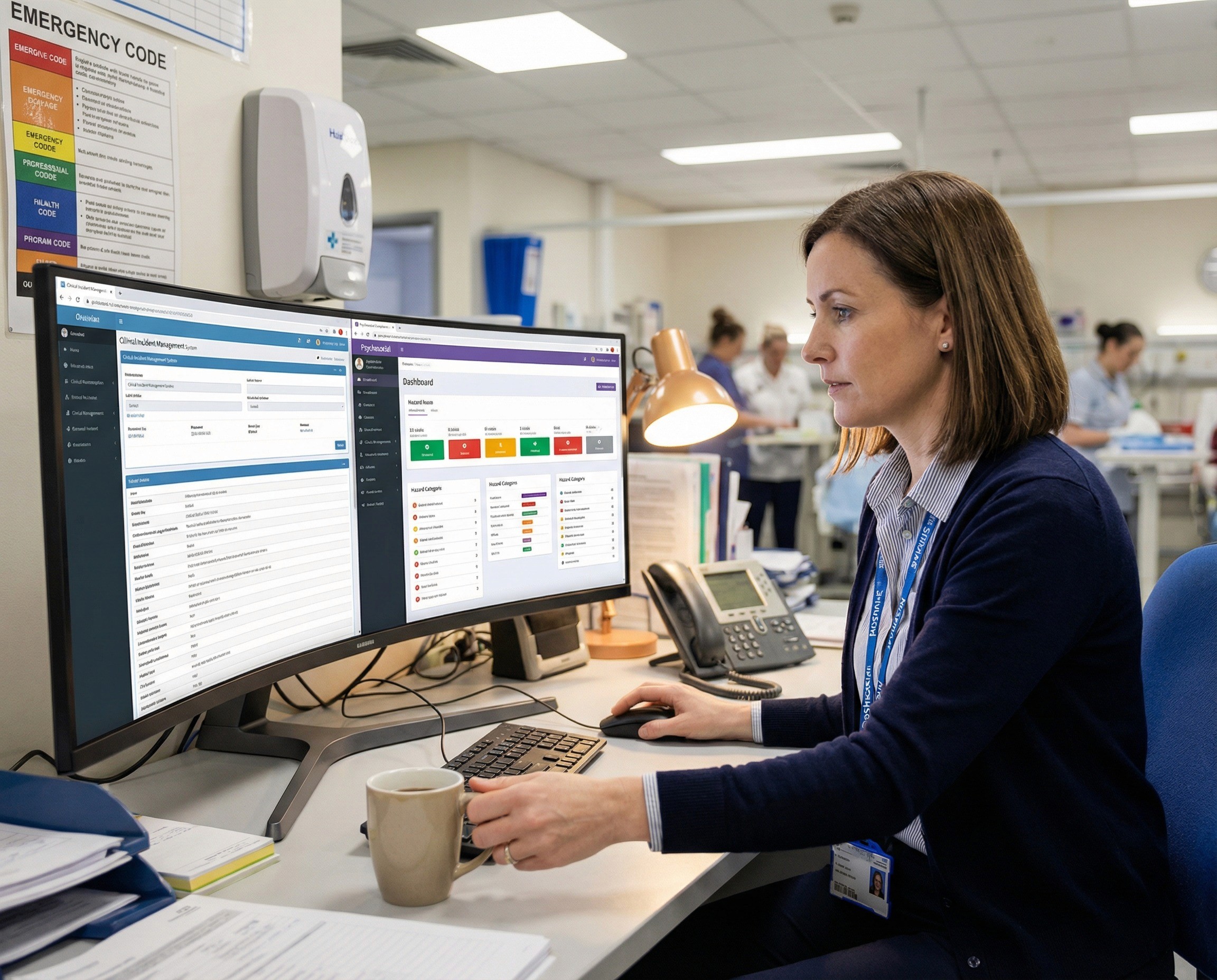
ReFresh runs alongside your existing WHS and clinical systems
ReFresh operates alongside SafetyCulture, Donesafe, RiskMan, VHIMS, or any existing WHS and clinical incident system as the dedicated psychosocial layer. Incidents with a psychosocial dimension flow from your existing systems into the OS for structured investigation, root cause analysis, and connection to the psychosocial risk register and control framework. Clinical incident management and physical safety management continue in the systems your teams already use. The OS handles what those systems were not designed for.
For healthcare organisations with governance obligations to a board, the OS generates governance-level reporting that aggregates risk data across all sites, care settings, and jurisdictions without exposing individual detail or clinical information. Directors and officers carry personal due diligence obligations under the WHS Act. The OS produces the evidence trail that supports those obligations across the full scope of the organisation's operations, continuously, so the board has confidence without requiring the safety team to build a separate governance reporting process.
API-forward approach with integrations to major WHS platforms
Psychosocial incidents routed from clinical and WHS systems
Governance reporting across all sites without individual detail
Officer due diligence evidence produced continuously
SECURITY & COMPLIANCE
Your data.
Always protected.
Your data.
Always protected.
Your data.
Always protected.
Refresh is GDPR, SOC2, & USDP compliant
Refresh is GDPR, SOC2, & USDP compliant



Security standards
We are GDPR, SOC2, and USDP compliant. AWS hosts our app, and we undergo annual third-party audits to ensure platform and infrastructure security.
Security standards
We are GDPR, SOC2, and USDP compliant. AWS hosts our app, and we undergo annual third-party audits to ensure platform and infrastructure security.
Anonymous by design
Sensitive psychosocial information is handled by design. Data is structured and access-controlled so information is only visible where necessary.
Anonymous by design
Sensitive psychosocial information is handled by design. Data is structured and access-controlled so information is only visible where necessary.
Custom permissions
Set clear boundaries with flexible permissions. Admins and teams manage access, keeping data visible only where it belongs.
Custom permissions
Set clear boundaries with flexible permissions. Admins and teams manage access, keeping data visible only where it belongs.
Custom permissions
Set clear boundaries with flexible permissions. Admins and teams manage access, keeping data visible only where it belongs.
GOT QUESTIONS?
Frequently asked questions
Frequently asked questions
What psychosocial risks are most common in healthcare and aged care?
Exposure to trauma and grief, occupational violence and aggression, shift work and fatigue, and sustained emotional demands. These are among the most significant psychosocial hazards in any sector.
We have policies and incident systems. Are we compliant?
How does the OS work alongside RiskMan or SafetyCulture?
What hazards are most relevant to aged care?
Can we manage compliance across different care settings?
How does governance reporting work?