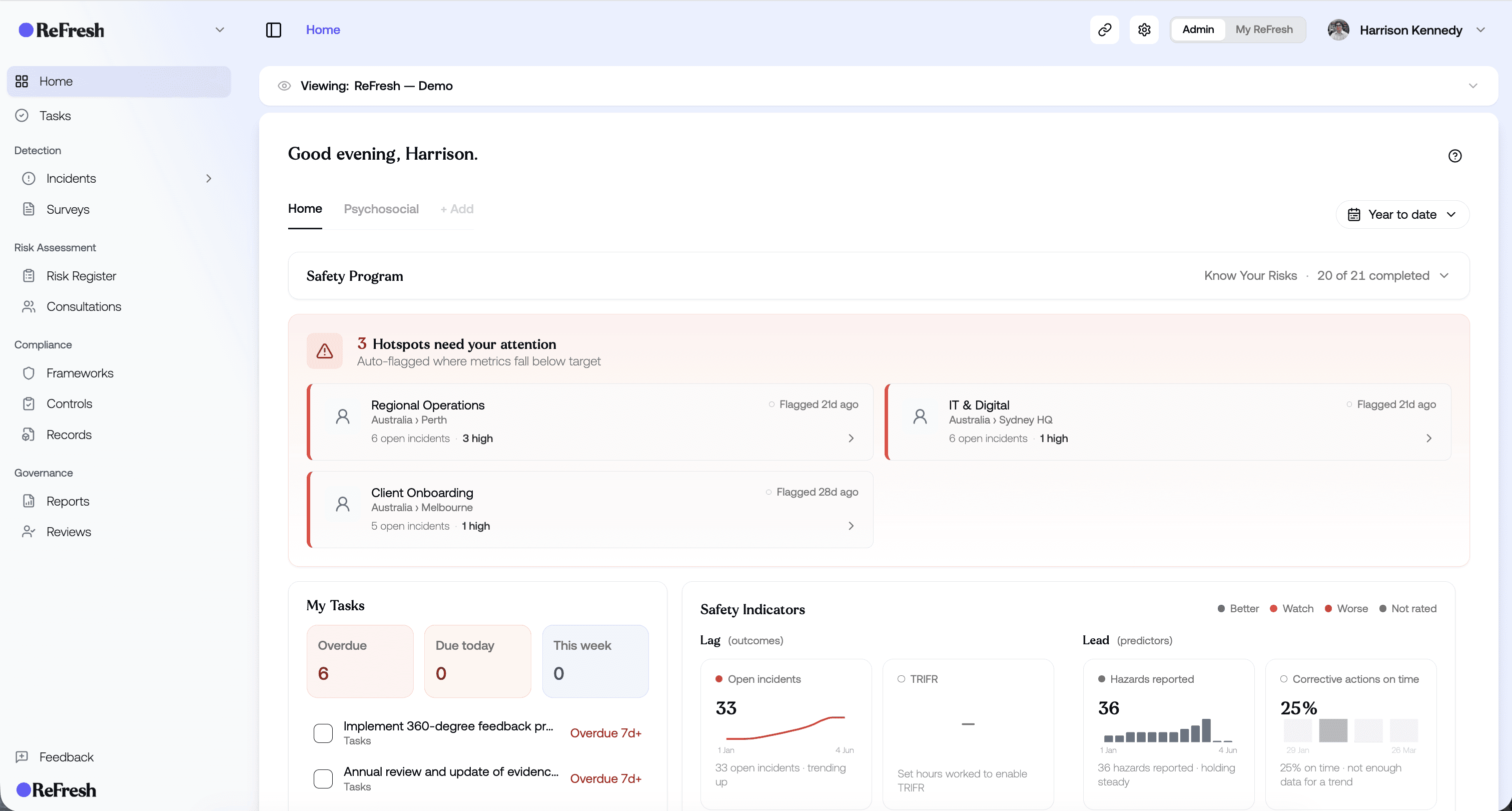
This lesson covers how to score residual risk, the risk left after your controls are in place, and how the platform shows the change between your previous rating and your current one.
What you'll cover:
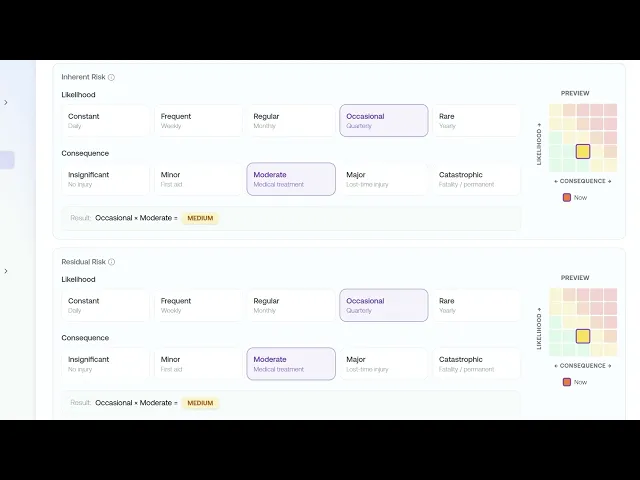
What residual risk is. What's left after your controls are applied, scored the same way as inherent but rating where the risk actually sits today.
Likelihood and Consequence. The same five options as inherent risk, picking the levels that match the risk with your controls applied.
The result. How your choices calculate into a rating, which should be lower than inherent if your controls are working.
Was vs now. The preview matrix showing your current residual marked Now, and the previous Was rating alongside it when you re-score, so you can see whether your controls have moved the dial.
Key takeaways:
Residual risk reflects the risk with controls in place, in contrast to inherent risk, which is scored before any controls.
The scoring is identical to inherent (Likelihood by Consequence), so the two are directly comparable.
The was-vs-now comparison is your evidence that controls are working, showing whether re-scoring after a change has actually lowered the rating.
IN THIS COURSE
2
.
E13. From survey data to risk assessment
2
min
2
.
E14. Creating custom risk assessments
2
min
1
.
E15. Inherent risk scoring
1
min
2
.
E16. Exposure assessment
2
min
1
.
E17. Risk status workflow and treatment strategy
1
min
1
.
E18. Residual risk scoring and the was-vs-now comparison
1
min
1
.
E19. Hazard category drill-down
1
min