This lesson connects survey data through to the risk register and the hierarchy of controls, showing the full loop from survey score to measured control progress.
What you'll cover:
The risk profile on the survey. The Risk Profile section, where the top hazards score highest, sorted across the bands (Critical, High, Moderate, Low, and Acceptable below the 5.0 threshold), with each hazard mapping to a category in the risk library.
The Risks & Controls tab. The survey tab listing the risks in your register that match the highest-scoring hazards, with the controls already linked to each.
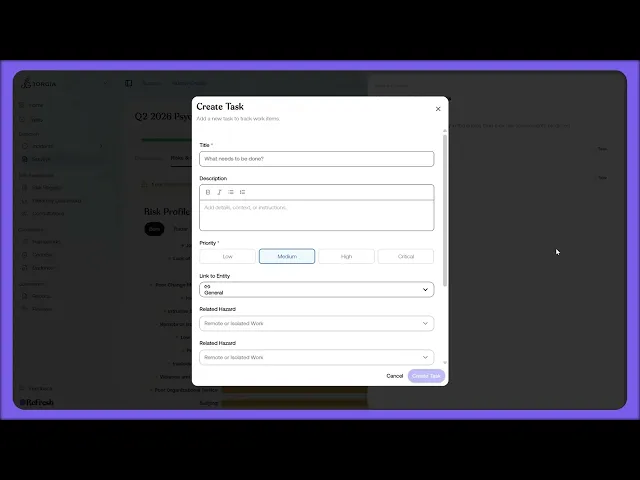
Reviewing mismatches. The call-out where survey results haven't aligned with the expected risk assessment, which you can open to review the mismatched assessments and create a task to address them.
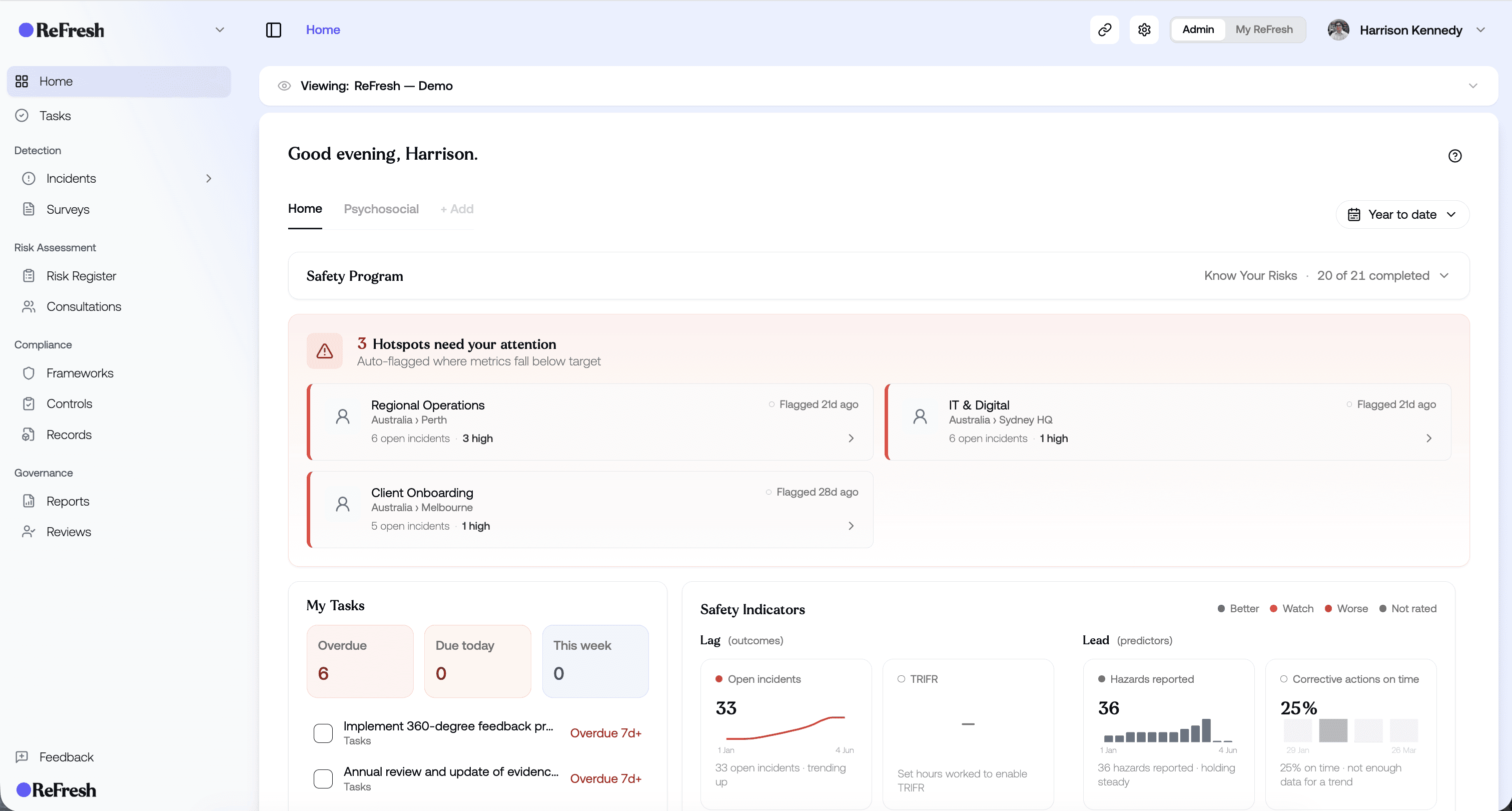
Back to the dashboard. How the Hierarchy Dashboard picks up the new assessment in the matching category's row count, with the Achieved hierarchy level climbing as controls are completed.
Key takeaways:
Survey hazards aren't a dead end. Each one maps to a hazard category in the library, so high scores point straight to the risks that need assessing.
The Risks & Controls tab and the mismatch call-out keep your survey evidence and your register aligned, flagging where they've drifted apart.
This is the full loop: survey scores hazards, scenarios land on the register, controls run against the hierarchy, and the dashboard tells you whether the work is changing the score.