This lesson introduces psychosocial surveys: what they measure, how they differ from a regular engagement survey, and what the results dashboard shows you. It's a tour of the whole picture, with the rest of the Surveys track digging into each piece in detail.
What you'll cover:
What a psychosocial survey measures. The risks to your workers' psychological health and safety, things like workload, time pressure, role clarity, relationships, and work-life balance, mapped to the 17 recognised psychosocial hazards.
How it differs from engagement. Engagement asks how people feel about working here. A psychosocial survey asks where the risks to wellbeing are and how big they are, giving you evidence you can act on under work health and safety law.
Where to create one. Surveys are built from templates that define the questions, the hazards they map to, and how long the survey takes, from short pulse surveys through to your full annual assessment.
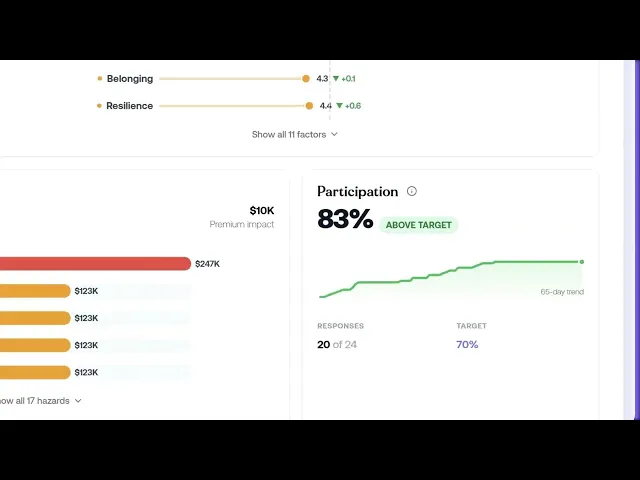
What the results dashboard shows. A tour of the five tiles: psychosocial risk score, risk profile, protective factors, estimated cost impact, and participation.
Key takeaways:
A psychosocial survey measures risk to psychological health, not employee sentiment, and the output supports your legal duty under WHS law.
The headline risk score sits top-left; the hazards behind it sit top-right in the risk profile, sorted largest first.
Participation is critical context for everything else on the page. A 40% response rate tells a different story to an 80% one.
IN THIS COURSE
3
.
E5. How psychosocial surveys work
3
min
3
.
E6. Choosing the right survey template and designing your first assessment
3
min
1
.
E7. Distribution strategy
1
min
1
.
E8. Reading your risk profile
1
min
1
.
E9. Drilling into hazard categories
1
min
1
.
E10. Protective factors
1
min
1
.
E11. The cost impact model
1
min
1
.
E12. Survey trends
1
min